
What Happens When a Neighbor’s Tree Damages Your Property?
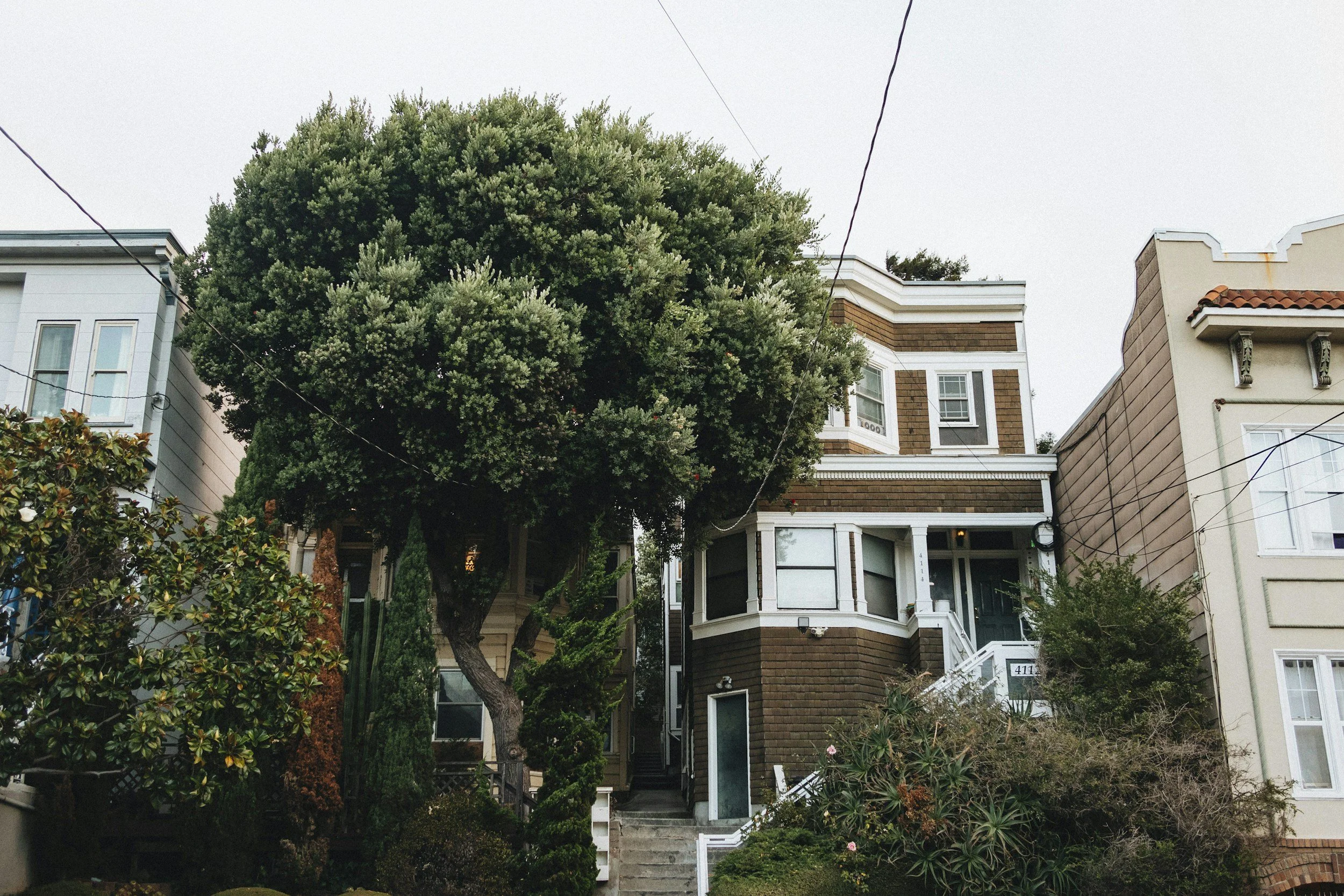
When a neighbor’s tree falls onto a house, fence, vehicle, or yard, the owner of the tree is not automatically responsible for every expense. Liability often depends on why the tree failed and whether the owner knew—or reasonably should have known—that it was dangerous.
Insurance coverage is a separate question. In many storm-related cases, the owner of the damaged property starts by contacting their own insurer, even though the tree grew on neighboring land.
Tree ownership, trimming rights, negligence standards, and available remedies vary by state and locality. Local ordinances may also protect certain trees or regulate their removal.
Deal With Immediate Safety Risks First
Stay away from fallen utility lines, unstable branches, damaged roofs, and partially uprooted trees. Treat every downed wire as energized and contact the utility company or emergency services.
If water is entering the building, make reasonable temporary repairs when they can be completed safely. Covering an opening or arranging emergency stabilization may prevent additional damage.
Do not climb onto an unsafe roof or attempt to remove a large suspended branch without qualified help.
Document the Damage Before Cleanup
Take photographs and video from several angles before moving debris, unless immediate removal is necessary for safety. Document:
The entire tree and where it was rooted
The broken trunk, roots, and branches
Damage to buildings, fences, vehicles, or landscaping
Visible decay, cavities, dead limbs, or fungal growth
Nearby utility lines
The weather and surrounding conditions
Temporary repairs and cleanup work
Save estimates, invoices, receipts, messages, prior complaints, arborist reports, and photographs taken before the incident. If the tree is removed quickly, those records may become important in determining what caused the failure.
Notify Your Insurer Promptly
Contact the company that insures the damaged property. Many homeowners policies cover damage to an insured house or other covered structure when a tree falls because of wind or another covered event, even when the tree belonged to a neighbor.
Coverage depends on the policy, cause of loss, deductible, and applicable exclusions. Do not assume that every cleanup expense will be covered.
Tree removal from an open yard may receive limited or no coverage when the tree did not damage an insured structure or block an eligible access point. Ask the adjuster specifically about debris removal, temporary repairs, detached structures, landscaping, and additional living expenses.
If a tree damages a vehicle, the claim will ordinarily fall under auto insurance rather than homeowners insurance. Comprehensive auto coverage generally covers falling trees and branches; liability-only coverage usually does not.
A Storm Does Not Automatically Make the Neighbor Liable
When an apparently healthy tree falls during a storm, the event may be treated as a natural occurrence rather than the neighbor’s negligence. In that situation, the damaged property owner commonly files with their own insurer and pays the applicable deductible.
The fact that the trunk stood on the neighbor’s land does not by itself prove fault. Ownership of the tree and legal responsibility for the loss are different issues.
State insurance regulators in Texas, Washington, North Carolina, Maryland, and other jurisdictions generally advise that a homeowner’s own policy may respond when a neighbor’s tree damages the insured home.
Negligence May Change Responsibility
The neighbor may be responsible when the damage resulted from a failure to use reasonable care. The specific legal standard varies, but relevant questions may include:
Was the tree dead, diseased, severely leaning, or visibly unstable?
Had large branches already fallen?
Did an arborist, government inspector, or another qualified person identify a hazard?
Did the owner receive prior complaints or written notice?
How long had the dangerous condition existed?
Did the owner have a reasonable opportunity to address it?
Was the tree damaged by the owner’s work or poor maintenance?
Did careless pruning or removal activity cause it to fall?
A rotten tree is not enough by itself to prove liability if the dangerous condition was hidden and the owner had no reasonable way to know about it. Conversely, a written warning does not automatically establish negligence. It can, however, help show that the owner had notice of a specific risk.
If negligence appears possible, your insurer may investigate and seek reimbursement from the responsible party or that party’s insurer. This process is called subrogation. Ask whether recovery of your deductible will also be pursued.
Determine Who Owns the Tree
Tree ownership is often based on the location of the trunk rather than where branches, roots, or leaves extend. A trunk located completely on one property will usually belong to that property owner.
A trunk growing directly across a boundary may be treated as a boundary tree, potentially giving both owners legal interests in it. The rules for pruning or removing a boundary tree differ by state.
When the property line is uncertain, do not rely on a fence, mowing pattern, or online parcel map. A survey may be necessary before major work or litigation.
A tree beside a road, sidewalk, utility easement, or public area may belong to—or be maintained by—a city, county, utility, or another entity. Contact the appropriate agency before arranging removal.
Be Careful When Trimming Encroaching Branches or Roots
Many jurisdictions allow a property owner to trim branches or roots extending across the property line. That right is commonly limited.
A homeowner may be prohibited from:
Entering the neighboring property without permission
Cutting beyond the property line
Removing a boundary tree without consent
Pruning in a way that kills or dangerously destabilizes the tree
Violating local tree-protection rules
Interfering with protected habitat or utility equipment
Improper trimming can create liability for damage to the tree and may result in enhanced damages under some state laws. Obtain advice from a qualified arborist and check municipal rules before performing substantial pruning.
Who Pays for the Fallen Portion?
After a tree falls, each owner often handles debris located on their own property unless negligence, insurance coverage, or an agreement changes the result. State law may treat removal obligations differently, particularly when the trunk remains rooted next door or blocks access.
Do not enter the neighbor’s property or remove the remaining tree without permission. A tree company should know the property boundary and have clear authorization for the area where it will work.
Before work begins, ask the contractor for a written estimate, insurance information, and an explanation of how additional property will be protected.
Communicate in Writing
Inform the neighbor about the damage without making threats or immediately assigning blame. Exchange insurance information if appropriate and keep important communication in writing.
If a neighboring tree appears dangerous before it falls, send a dated notice describing the specific concern. Include photographs and, for a significant hazard, consider obtaining an assessment from a certified arborist. Ask the owner to have the tree evaluated rather than demanding removal based only on appearance.
For an existing dispute, avoid signing a release or accepting a payment marked as full settlement until you understand the total repair cost.
When Additional Help May Be Necessary
Consider consulting a local attorney when:
The damage is substantial or uninsured
The insurer denies coverage
There is evidence the owner knew of a serious hazard
The property line or tree ownership is disputed
A boundary tree was removed without agreement
Roots or branches are causing continuing structural damage
A government-owned tree is involved
The neighbors disagree about access or cleanup
A lawsuit deadline may be approaching
Small claims court may be an option when the amount falls within the local limit, but the claimant still needs evidence showing responsibility and the amount of the loss.
A fallen tree can create both an insurance claim and a legal dispute, but they do not always have the same answer. Start by protecting the property, documenting the scene, reviewing the relevant policies, and identifying whether the failure resulted from an unexpected event or a hazard that should have been addressed.
This article provides general information, not individualized legal advice. Tree ownership, negligence, trimming rights, insurance coverage, and damage remedies vary by state, locality, and policy.
